
We’re three weeks into spring 2026, but overnight temperatures are still dropping into the 20s, with frost warnings lingering. The bees are stressed—and as their keeper, so am I.
Last week, I visited a bee yard in Glen Cove where a hive didn’t make it. They had enough food, but the cold broke their cluster. Without that shared warmth, they couldn’t survive. It’s a hard thing to witness—losing a hive just as spring begins, after they’ve made it through the long winter.
So I went for a walk.
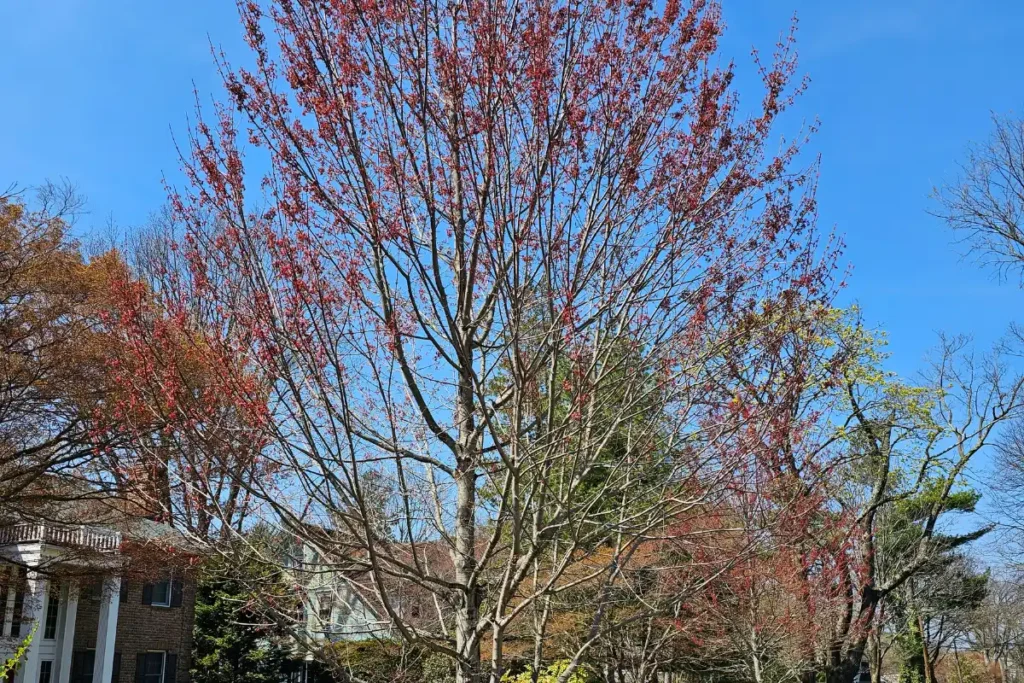
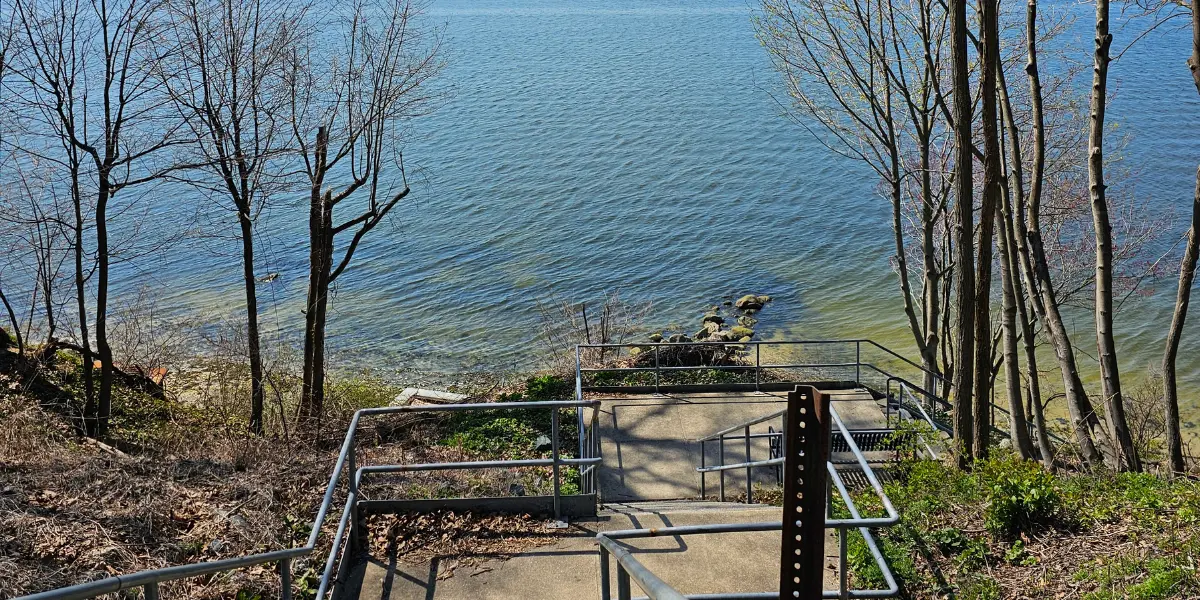
I started in Glen Head, up the big hill and toward Sea Cliff, with Sunset Park (Veteran’s Memorial Park) as my destination. I was hoping for a view of Hempstead Harbor. Sometimes it’s the trees—but sometimes it’s the water—that steadies me.
I’ll be honest—I wasn’t just walking for the view. I was looking for signs. Wondering, quietly, if I’m doing enough…if any of us are.
Reading the Landscape
It’s still early. Too early, in many ways, to expect to see bees working in numbers. But a beekeeper learns to read the landscape differently.
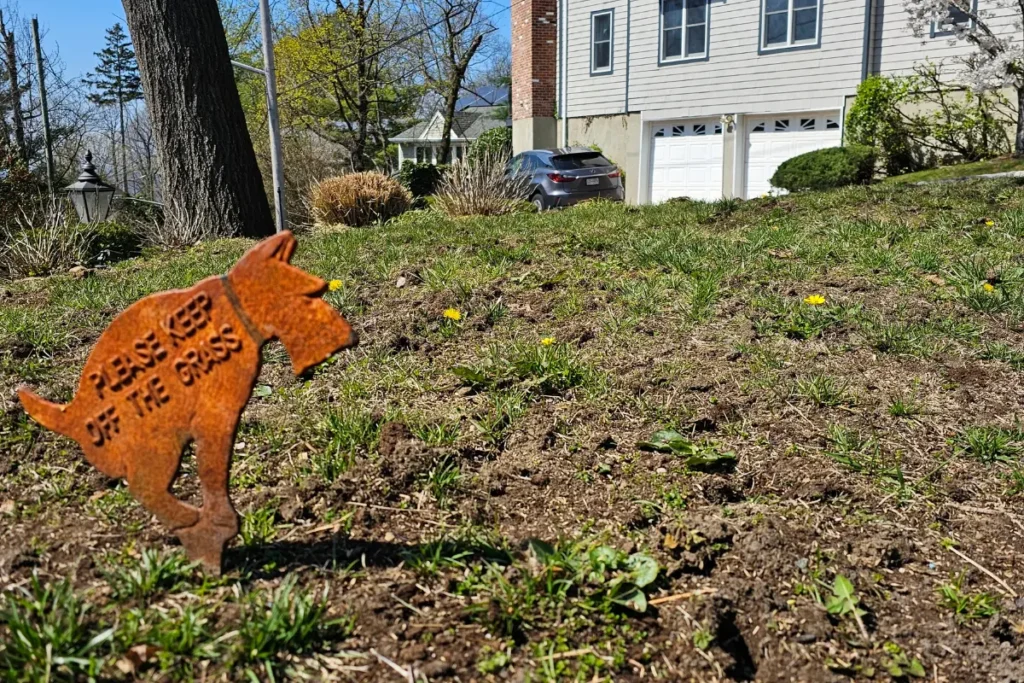
You look for what’s blooming.
You look for what’s about to bloom.
You look for patterns—or the absence of them.
And you ask: Will this place carry them through the season?
Sea Cliff is said to be a one-mile-square village, but it never really feels that contained. It’s often described as eclectic—and walking through it, that word starts to make sense. No two yards felt the same.
There wasn’t a single rhythm—but there was movement.
An Unexpected Offering
At the edge of a small, slightly worn gas station, I noticed a patch of dirt with a few blooming grape hyacinths.
Muscari—tiny, purple-blue flowers that bloom just after the crocuses—are small but meaningful for bees. Not native, but well adapted. Reliable.
They weren’t planted as part of a garden. No intention, no design—just pushing up through compacted soil in a place that didn’t seem like it could offer much of anything.
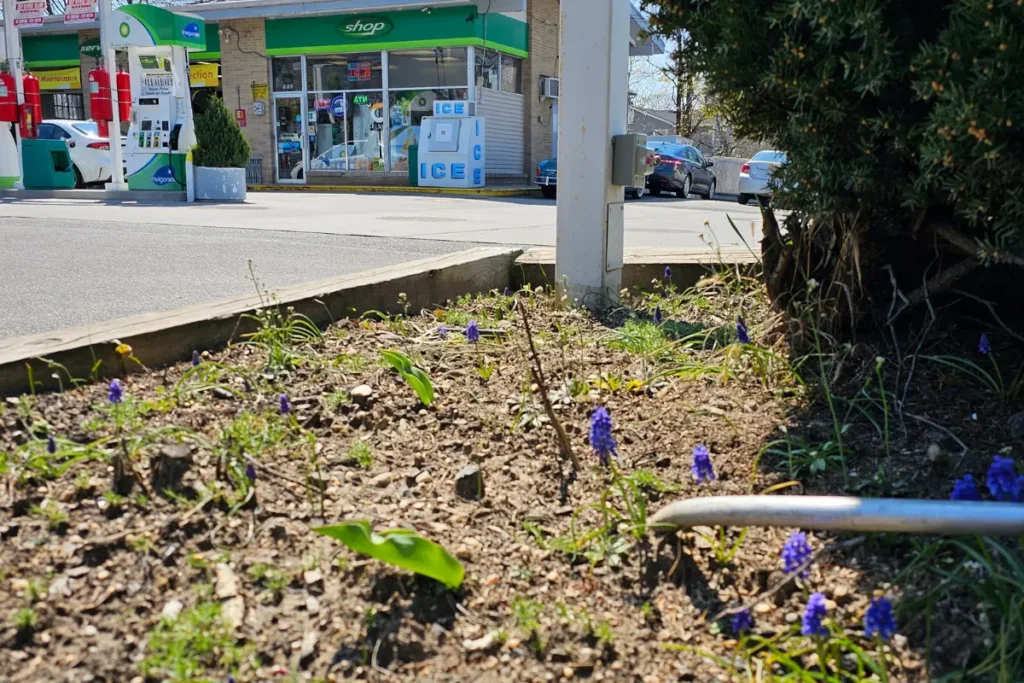
And still…they were there.
That matters.
What’s Blooming (and What Isn’t)
There were daffodils everywhere—bright, cheerful, and, for the bees, mostly useless.
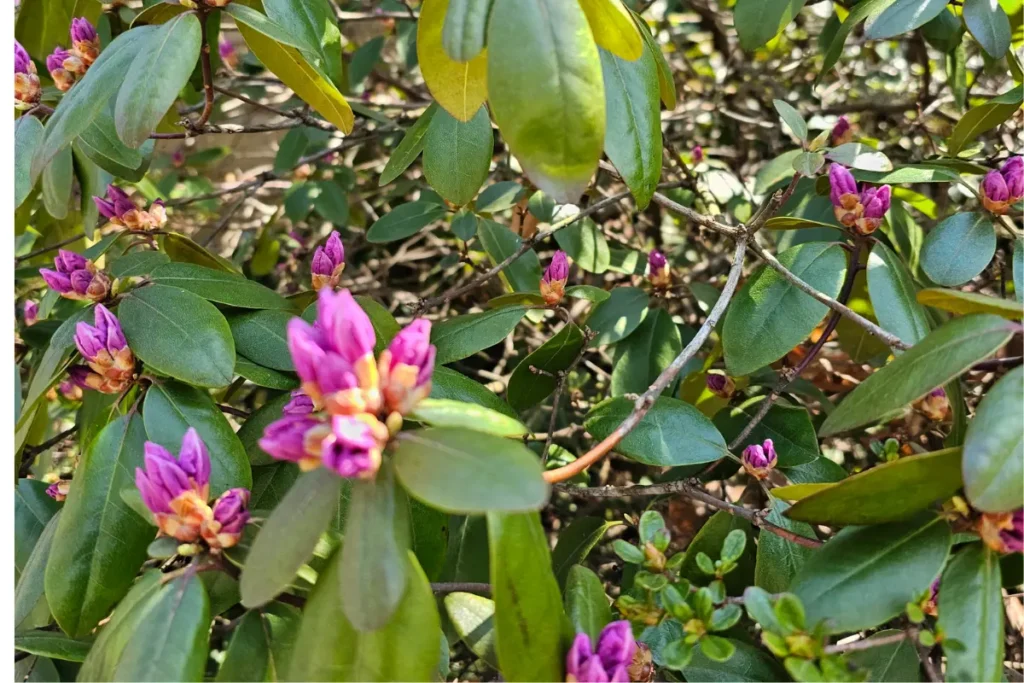
A budding rhododendron caught my eye—thick, glossy leaves, flowers not far behind. It’s a beautiful plant, but not always a helpful one. Its nectar can be toxic to honey bees, and they tend to avoid it unless forage is scarce.
It was a quiet reminder: not everything in bloom is part of the solution.
A magnolia just beginning to open.
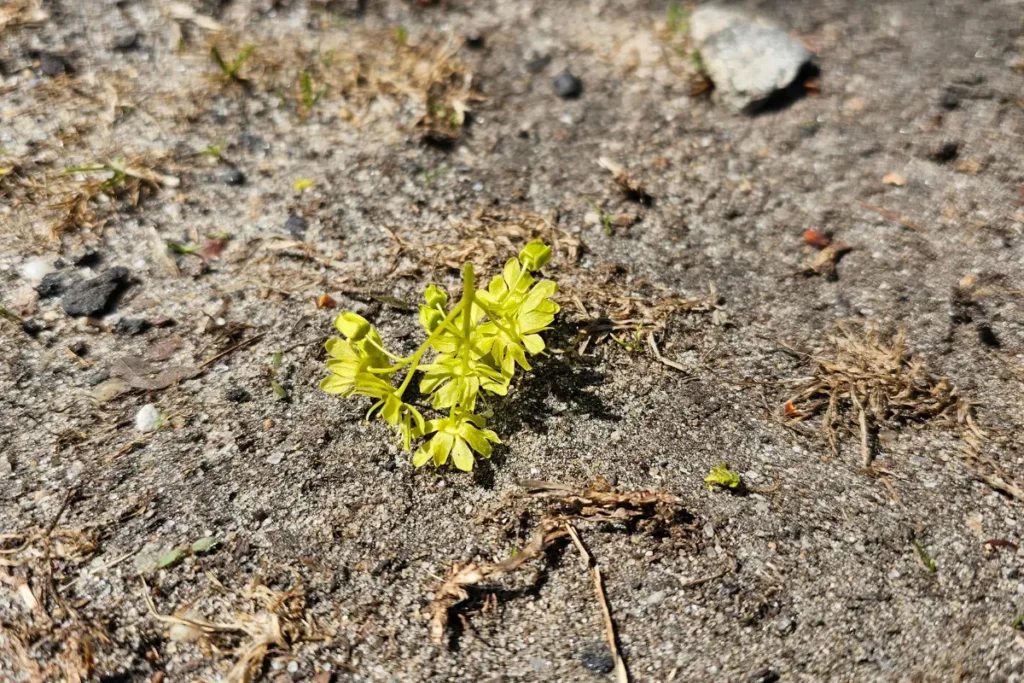
A fallen branch of Norway maple, its pale green flowers already forming.
Spirea bushes waiting quietly in the background.
Nothing overwhelming. No sweeping fields of forage.
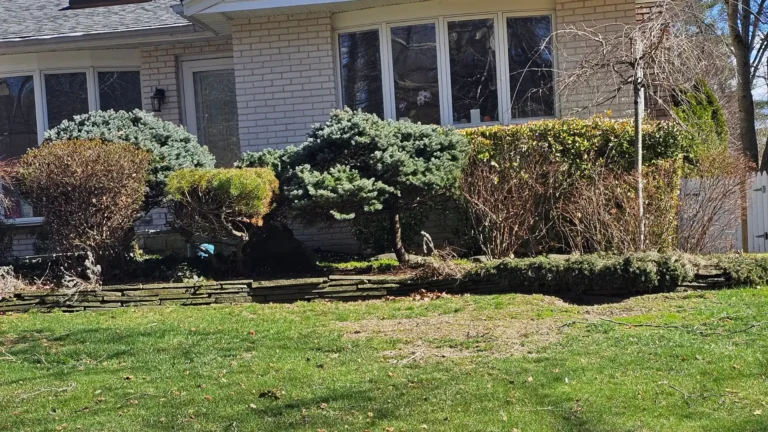
But also—no walls of arborvitae.
No endless boxwood hedges.
Instead, variation.
One yard different from the next.
Small decisions made independently.
A mix of plantings, bloom times, intentions.
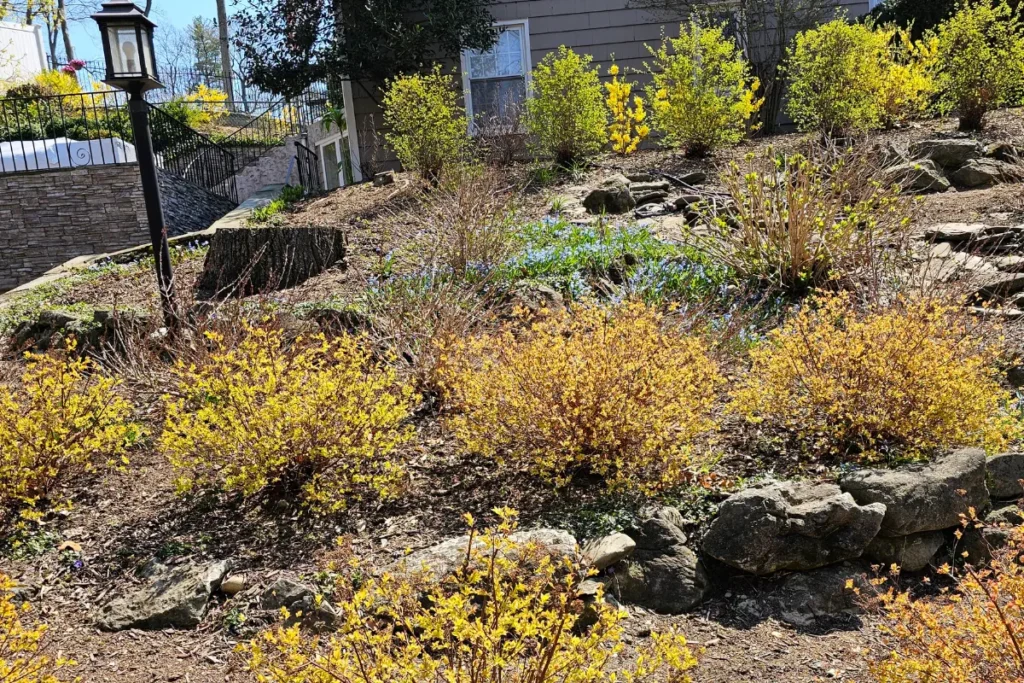
There’s a lot happening in early spring—but not all of it is happening for the bees.
In early spring, bees don’t need perfection. They need enough.
Enough diversity. Enough overlap. Enough small choices that, together, help carry them through.
If you’ve never thought about your yard through a pollinator’s eyes, you might enjoy my Backyard Bees scorecard: How Bee Friendly Is Your Neighborhood?
It didn’t look like much at first glance.
But to a beekeeper, it looked like possibility.
What the Bees Will Find
I didn’t see many bees that day. It was late, and the air still carried a chill.
But I know what they’ll do.
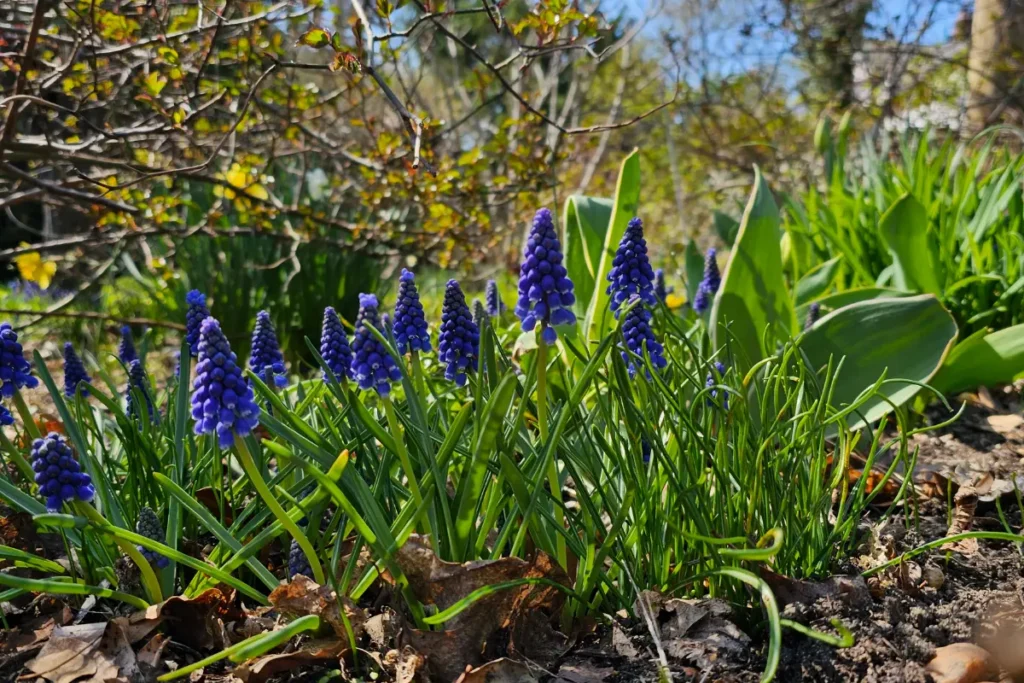
They’ll find the muscari at the gas station.
They’ll work the maple when it opens.
They’ll move from yard to yard, taking advantage of whatever is available—because here, there isn’t just one thing. There are many small things.
And that’s what carries a hive through a season.
Hope, Even Here
A few miles later, back in Glen Head, I passed a dense stretch of grape hyacinth along an untended roadside. It was late in the day, and I didn’t see bees working them—but I didn’t need to.
They’ll find them.
They always do.
And maybe that’s what I needed to see.
Not perfection. Not fields of flowers or carefully planned pollinator gardens.
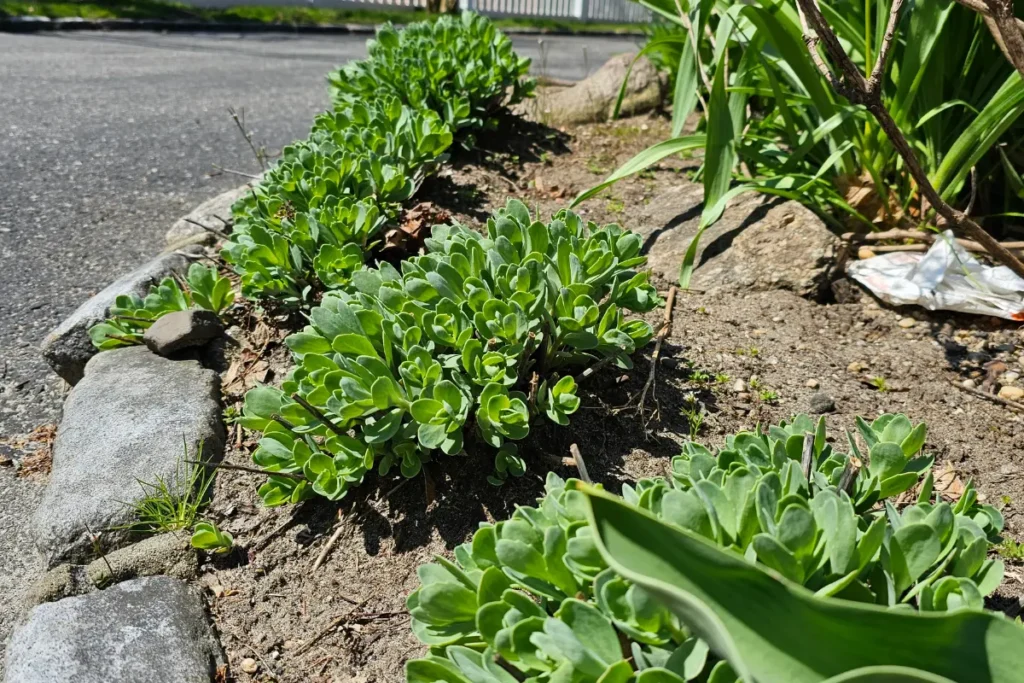
Just enough.
In enough places.
A reminder that even in a cold, uncertain spring…
there are still signs of life.
These are the kinds of small moments I share in #thebeesnoticed.
Read the first walk: Glen Head in early spring