
I’ve never been to Wisconsin. And I’ve never harvested honey from wild bees. But I have read Little House in the Big Woods, the first of nine books in the Little House series by Laura Ingalls Wilder.
The series was written in 1932 about life in the late 1800s, and like many great books, it was later turned into a television show. I remember my grandmother loving that show—absolutely no talking while it was on. What I can’t remember is which came first…me reading every book in the series, or watching it with my nana.
These days, I keep in touch with my nieces in California through our reading lists on Goodreads. When I saw Little House in the Big Woods pop up on one of their lists, it stirred up one of my very first memories of bees.
The Honey Tree
It’s been a long time since I read those books—but I read them more than once. And it’s funny…because in my memory, I wasn’t fascinated by the bees the way you might expect.
I was scared.
Pa cut down an old tree and was suddenly surrounded by bees. In true Pa fashion, he told the girls he worked quickly and didn’t get stung. But my imagination didn’t see it that way. I could hear the buzzing. I could feel the chaos. Those bees were angry, and I was right there with him.
(If I’m being honest, my very first “bee memory” probably goes back even further—to Winnie the Pooh and the Honey Tree. Who remembers Pooh disguising himself as a little black rain cloud to steal honey? Grown-up me is laughing just thinking about it. Classic Pooh Bear.)
Looking back now, through my beekeeper’s eyes, I have to smile.
Because I cannot imagine putting on a pair of overalls, chopping down a tree, reaching in with my bare hands, and walking away with buckets of honey. I just can’t.
Looking Back with Beekeeper Eyes
In reality, wild (feral) honey bees often make their homes inside hollow trees. It’s not unusual for an arborist to cut into a fallen log and discover a colony living quietly inside. I’ve even been called to one myself—after a tree was taken down, the bees followed their queen and clustered on the side mirror of the tree truck. It was one of those moments you don’t forget.
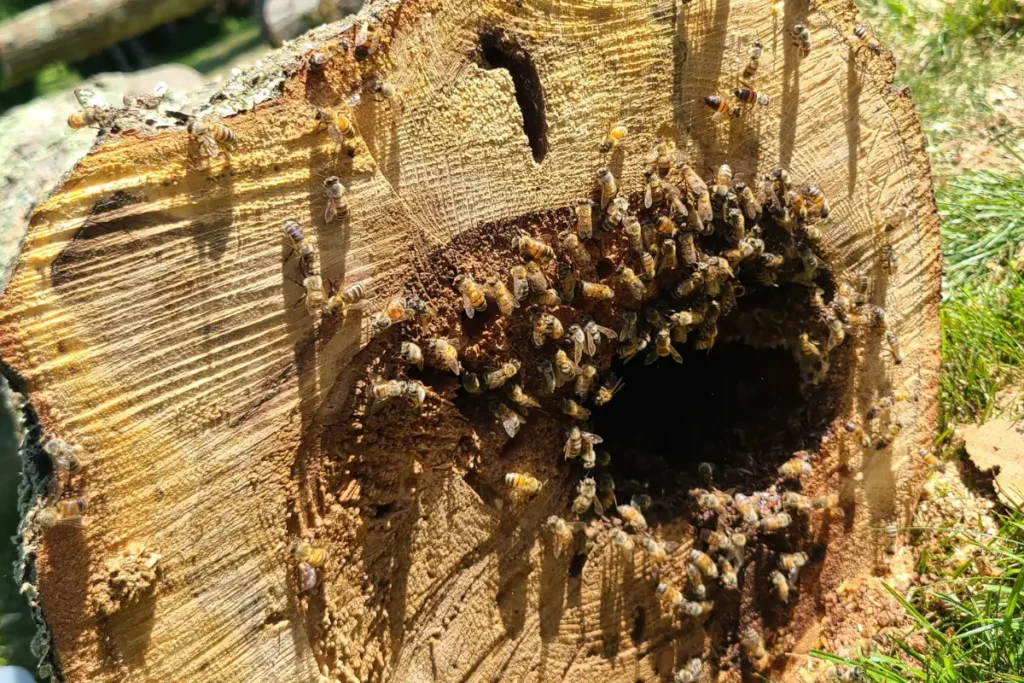
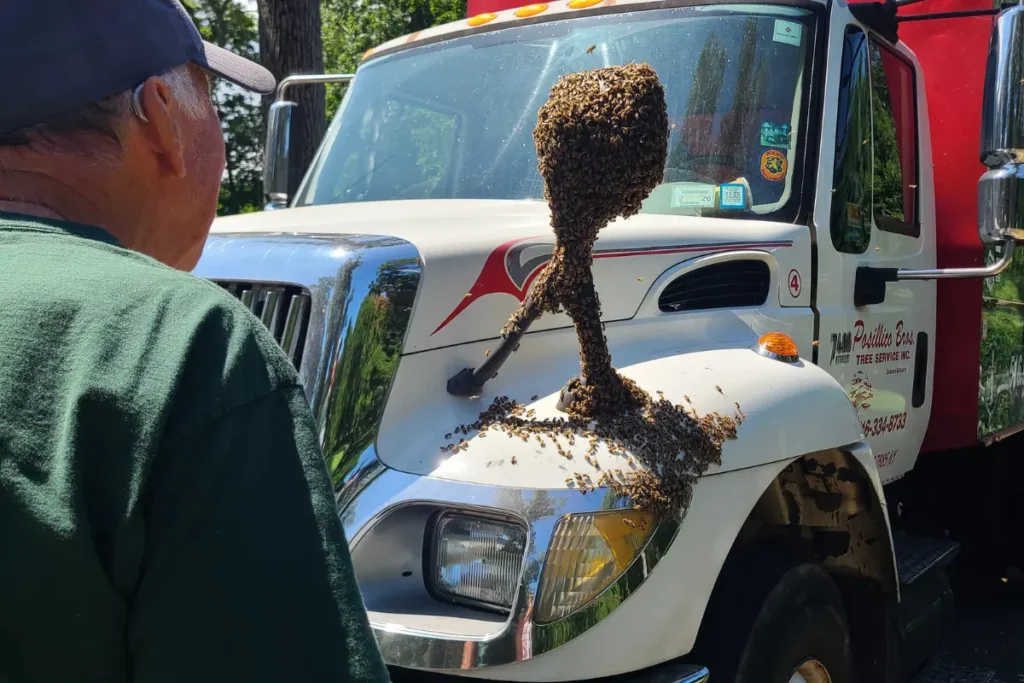
Bees are actually quite gentle. Unlike their cousins, the yellow jackets, they don’t go looking for trouble. But if you cut into their home—break apart their hive and take their honey—well…a few stings would be understandable.
The truth is, there is a way to harvest honey calmly.
A little smoke, gently used, masks the scent of the queen. The bees become momentarily disoriented, focused on her, and the whole hive softens. That’s when I can move slowly, carefully, and take only what they can spare—without destroying their home.
No axes. No disguises. No running.
Just a different kind of understanding.
And that’s what I appreciate most, looking back at those stories.
They didn’t pretend bees were pets.
They didn’t make them soft and cartoonish (those are bumblebees).
And they didn’t make them talk.
They showed them as something a little wild. A little unpredictable. Part of the natural world.
And they are.
Bees are real.
They are part of the land.
And they deserve our respect.
The Bee Books
Not every “bee book” is about the bees. I remember reading The Bee Sting when it made the New York Times list—it stayed with me for different reasons entirely.
→ Part of the Bee Books collection