
save for later
I recently learned about Be The Bee — a Christian Greek Orthodox movement centered on living faith through justice, love, and righteousness. The ministry often points to the life and work of Dr. Martin Luther King, Jr. as a powerful example of faith in action.
Beyond the alliterative name (and the reference to my favorite insect), Be The Bee caught my attention for another reason. They didn’t choose the yellow jacket. Or the common fly. They chose the honey bee.
That choice was intentional.
So let’s talk about what it might mean to bee the bee in 2026 — and to carry the spirit of that idea with us all year long.
Why the honey bee?
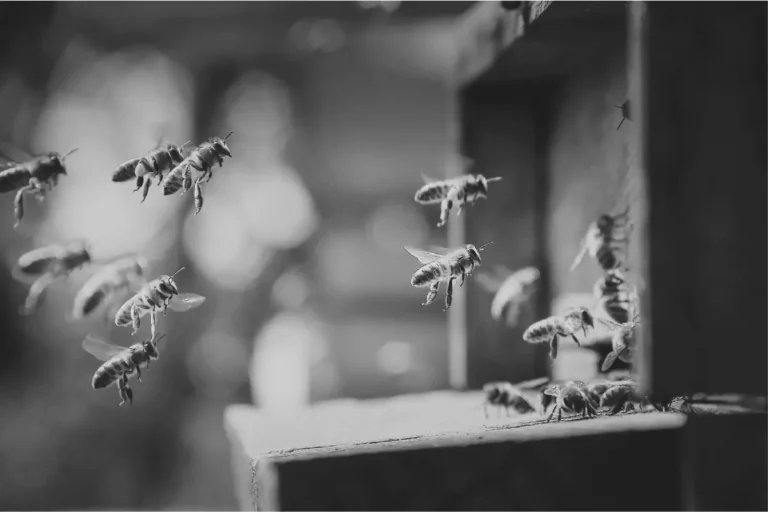
Bees are tireless in their commitment to the hive. Scout bees and foragers begin work with the first light of morning and don’t stop until the sun goes down.
The scout’s job is to search for rich sources of nectar — the essential ingredient that eventually becomes honey. When they find it, they return to the hive and dance. And it is a joyful dance. In their excitement, they bump into one another and stumble a bit. Through movement, the dance communicates where the nectar is, how far away it is, and how to get there.
The joy is contagious. And inspiring.
The forager bees take over, racing between hive and flowers again and again — and again. They fly a little slower than the scouts because they are loaded — not just with nectar, but with pollen too. If you watch bees in early spring, you’re likely to see one literally drop onto the landing board, exhausted by the weight of its haul.
It is exhausting work. And science tells us it takes the lives of twelve bees to produce a single teaspoon of honey.
And yet.
Be The Bee asks us to look at the bigger picture. One bee’s contribution is minuscule on its own. But the collective, ongoing effort of thousands of bees results not in teaspoons, but in pounds of rich, golden honey — enough for survival.
Small work. Shared purpose.
Be The Bee, and Dr. King
As I read more about Be The Bee, it became clear why Dr. Martin Luther King, Jr. is so often referenced within this movement. He lived his faith through action — choosing what was right, believing deeply in people, and holding firm to non-violence even when progress was slow and the work was hard.
At its heart, Be The Bee calls us to action too — to focus on the good and the beautiful. Not to ignore what’s broken, but not to let it consume us. To keep believing in the bee-utiful, even when the noise gets loud.
Thinking small (as usual)
This way of thinking isn’t new for me.
I don’t usually share the hard things — the ones that make me want to quit. The exhaustion that comes with small, persistent work:
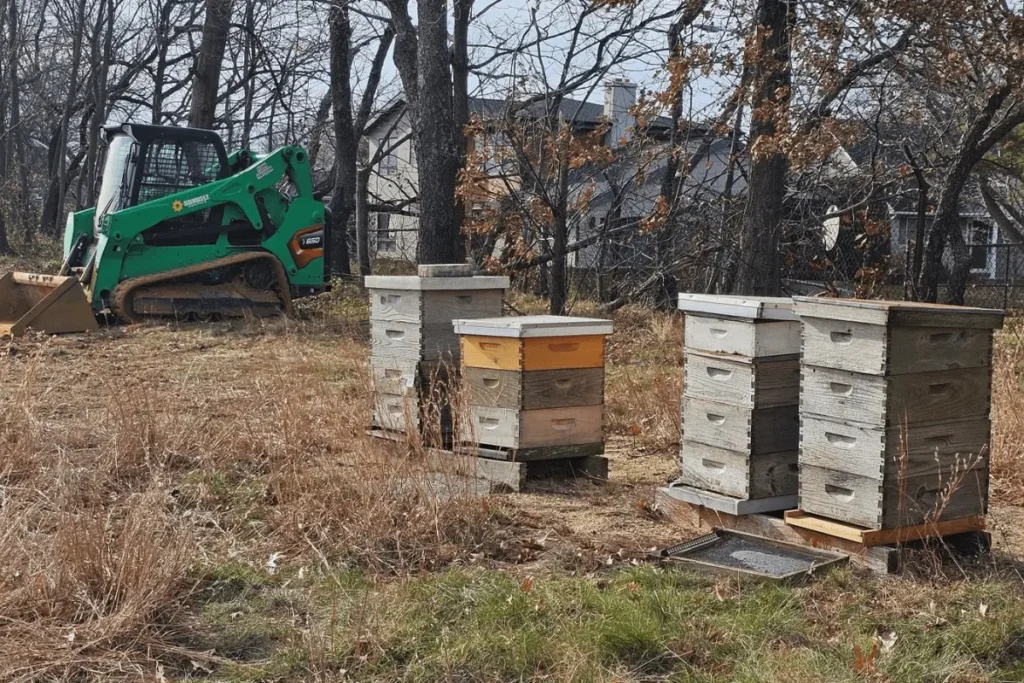
- sweaty days on hilltops
- time constraints of small business versus family
- computer glitches
- the challenges of sustainable packaging
- getting stung
But then there are the quieter moments — the ones that keep me going:
- seeing winter bees in the snow and knowing there’s still life inside the hive
- watching a single bee drink from a crocus
- the smell of linden trees in bloom
- small-batch skincare colored only by plants, no dyes
- slowly harvesting honey and waiting for that first drip (which still gets me every year)
The good is what being the bee is all about. It’s easier to share. I can’t ignore the ugly — but I can absolutely rejoice in the good.
That’s why I’ve always paid attention to the little things:
Wishing biscuits.
The quiet miracle of seeds.
A handwritten note.
A thoughtful reply.
Someone taking an extra minute to choose the right words.
Little things matter
That mindset shows up all over Backyard Bees. We’ve always offered “little things” — simple, meaningful ways to reach someone without overthinking it or breaking the bank. Little Pink Things, inspired by Breast Cancer Awareness Month, sold out completely.
That belief — that small, steady care adds up — is also what inspired The Grow With Me Project: a reminder that tending something over time, even in simple ways, can create real change. It’s the same idea I explored earlier in The Power of Small: How Kindness and Community Impact My Tiny Business, where I reflected on how community and kindness quietly shaped my work.
👉 Read The Power of Small
This season, I’m especially proud of Little Love Notes — small Valentine’s gifts paired with a note you choose, so the message actually sounds like you, not something pulled off a rack. Everyday love is what we’re about.
Bee-ing real
Be The Bee doesn’t ask us to ignore what’s hard. It simply reminds us not to lose focus on what’s good.
It invites us to notice:
- what’s still working
- what’s quietly growing
- what deserves care, even when it’s ordinary
With all the “bad” in the headlines, bee-ing the bee isn’t one of them.
Just this week, I received an order for a Little Love Notes – Wild Roses & Honey soap. The card option was “You’re the sweetest,” but the purchaser added her own words:
“Dear Barbara, thank you for introducing me to Backyard Bees!
XOXOX, Nancy”
And that felt especially bee-utiful to me.
And for you? If something good and bee-utiful comes to mind, and you’d like to share it, I’d love to read how you are the bee.
Bee well,
Kathy 🐝